When you write fiction, by what code are you held? What principles bind your work into a coherent whole? Do you need principles at all or can you write an anarchic story line governed by no other law except that it should be exciting to read? Should you analyze and agonize or should you just let your mind take its course along some route no matter how rough a track it may follow - a little like this sentence? I am writing here not of the great genius author but of the plodding novelist, 99% perspiration, 1% inspiration, whose chief concern is to get the work out on time to a publisher who may accept it, that is, an author who cannot afford to hear the lovely whooshing sound of a deadline racing by, as Douglas Adams put it.
Let's just think of young adult fiction, which is what I write. Young adult fiction is intended to be read by those who, as we grown-ups like condescendingly to say, are at an 'impressionable age'. Let's measure up our standards against the only moral code that most of us know, the ten commandments. Of course this is a religious code too. First, we recognise that the ten commandments are distinct from a code of laws, such as the Humarrabi code which includes such gems as 'If a slave say to his master: "You are not my master," if they convict him his master shall cut off his ear' a law from 3750 years ago. The ten commandments are more a set of encouragements or exhortations, of which perhaps only five should be attempted at any one time. Let's ignore the clearly religious commandments such as 'I am the Lord your God, who brought you out of the land of Egypt, out of the house of slavery. Do not have any other gods before me'. Instead we can progress to more practical matters.
What about 'You shall not make wrongful use of the name of the Lord your God, for the Lord will not acquit anyone who misuses his name'? Okay, this suggests that when the mean and wicked father in your tale returns home to find that his son, in pure self defence, has set up a 1000 volt electric fence around his house, he must not say 'May the Almighty damn you to Hell'. On the other hand he could without violating this commandment shout a naughty four letter word, perhaps a more likely though still less rational response. Right you are then, no blasphemous swearing or keep it to a minimum in your novels for young adults - if you are to obey the ten commandments.
Turning to the next commandment, we have, 'Remember the Sabbath day and keep it holy. For six days shall you labour and do all your work, but the seventh is a Sabbath to the Lord your God, you shall not do any work - you, your son or your daughter, your male or female slave, your livestock, or the alien resident in your towns.' Obedience to this, especially the rather obscure reference to aliens (extra-terrestrials?), might well interrupt the flow of the narrative. Of course the narrative flow may well fail due to much more mundane events if you were true to real life. For example in the American civil war, the greatest army ever assembled in that part of the world got tired on July 16th 1861, sat down or dispersed, many to pick blackberries out of boredom. Is this story true? Actually, yes, but we return to the truth and how it should be treated elsewhere. Whatever, it would be quite a challenge to hold the reader's interest in even a James Bond if he were to keep the Sabbath, female slaves or no female slaves. The Aston Martin running out of petrol would lack persuasive impact. So probably this commandment of observing the Sabbath must go by the wayside.
Honour your father and your mother. Now this is an interesting one. There can be no doubt that any hero absolutely has to be nice to his mother and maybe also to his father - but definitely his mother and to honour her. 'You leave my mother out of this, or I'll drill you fuller of holes than a sieve' is an immortal Hollywood line. At any rate the hero must honour his mother so long as she is not a monster. I mean, Haggis MacBeth, the only son of Lady Macbeth, could probably distance himself from his mum without attracting too much disapproval. (Again this statement raises the question of truth: was Lady Macbeth really the monster that Shakespeare made her out to be?). A heroine has possibly less of an absolute requirement to honour her mother, especially if the mother is Clytemnestra. Perhaps a heroine has more need to honour her father in order to be a proper and successful heroine. So the verdict on this commandment is that it can be followed with impunity, though it would be boring if taken to extremes.
You shall not kill. Now this is a right bastard, as the saying goes. You might as well forget it immediately unless you add the little word 'except......'. Certainly the Catholic Church had some explaining to do when they used to exhort the population to make black puddings of the blood of Protestants; either they do not take their own teaching seriously or they admit the word 'except'. The Protestants themselves, when not providing the ingredients of black puddings, were great burners of witches. But why was burning the choice of death for witches? Because there is an exhortation in the bible that men of the Church should not spill blood. If you burnt someone, you did not, literally, spill their blood, did you? So went the argument. Within your own novels, such reasoning would dismiss you as a crank or as a writer making a poor attempt at wit. So, what may we reasonably conclude? Notwithstanding the commandment against killing, your villains can strangle, shoot and murder, but surely not your heroes (or even the 'goodies').Or perhaps the hero may kill but feel remorse, or the opposition may die at the hero's or heroine's hands in self-defence or to defend another? So we must admit the word 'except'. Without it, there would barely be a 'crimi' written and people would have to devote themselves to reading decent novels instead. This would be a pity.
Looking down the list of commandments, we come now to, 'You shall not commit adultery'. To digress for once a moment, there was a 'Wicked bible' published in 1631 in England which had a misprint in it and read 'Thou shalt commit adultery'. When this scandalous error was detected, the print run was immediately recalled by order of the King and almost all the copies burnt. Nevertheless, this edition of the Bible would seem to have had an impact far beyond its circulation, especially when we consider that only 11 copies are extant. The same bible also referred in Deuteronomy to God's 'great arse' instead of 'greatness'. The influence of this latter misprint is not known but would provide an interesting research project, a posteriori, so to speak, for those interested in these matters. To return to the first misprint, should adultery be condemned, or even referred to, in books for the young? Of course many youthful readers may have seen adultery at first hand in real life, since the most popular game of the suburbs appears to be musical beds (a variation on musical chairs whose rules are similar and can be imagined by the reader). But if adultery is to be condemned, it must first be portrayed, providing a dilemma for the author. In fact since hero and heroine tend to be very youthful in novels for young adults, the problem may not arise in connection with them. But how should one portray adultery in their parents, for example? Should one miss out all reference to it; should the story line be so influenced by your moral considerations that adultery should be banned from the pages of books for young adults? Should they be protected to this extent? Should young adult novels be a flight from reality or should they be ready to prepare teenagers to face reality? Novels should surely be neither one nor the other but as a writer you must sometimes face the question 'is this morally suitable?' even though inclusion within your book of something on the wrong side of the bedclothes is an accurate reflection of the world. Unlike some Victorians, with all their enviable certainties, we do not generally set out to write moral tracts disguised as novels. Which wins, the moral or the storyline imperative?
The next commandment is not so troublesome, 'You shall not steal'. This raises no moral problems in today's world. The banker-gansters ('banksters') have perfected stealing to such a fine art that, to use the words of the Arabian nights 'if it were written with a needle in the corner of the eye, it would serve as a lesson to the circumspect'. Stealing is so much a part of modern finance that no novel dealing with that aspect of the modern world can miss out stealing without becoming completely unrealistic. No matter what subject you broach, there is bound to be a perverted financial interest somewhere in it. Of course, the hero or heroine may not steal, save in the Robin Hood style (now commuted into 'to take from the bankers and give back to the investors'). Of course, to steal can certainly take on an heroic appeal, if the amount stolen is great enough. This can generate an 'anti-hero' which could make for a great young adult novel, because it cocks a snook at authority. So my advice would be that petty stealing should be frowned upon, but stealing on the grand scale, especially by outwitting the thick-headed establishment, is quite legitimate in a young adult novel. I also have the impression that the ten commandments really refer to petty stealing. When Jacob steals the birthright from Esau, a major theft, he is something of a hero.
Now we come to 'You shall not bear false witness against your neighbour.' It is funny isn't it, how half-heartedly the English of the bible has been revised. This commandment is not intended to imply that it is perfectly okay to circulate nasty stories about the family down the street - but not the old man next door. Actually, this commandment against slandering others would seem to be a rule which wipes out almost all journalism. Rita Skeeter in Harry Potter is a really nice example of what I mean. I think that slander rewarded could make a great story-line so long as ultimately, in Book 3, the slanderer is exposed as an immoral monster (or a financial analyst or similar).
To crown all these exhortations, we end with 'You shall not covet your neighbour's house; you shall not covet your neighbour's wife, or male or female slave, or ox, or donkey, or anything that belongs to your neighbour.' The idea that your neighbour's wife may be classed with his ox and donkey (or Chevrolet Corvette) is interesting and may cause comment, but let that pass. At all events, the Ten Commandments try to contain human nature and keep society on the rails - and this is never more obvious than here, in this last commandment. Exciting young adult novels are very often about what is pushing society off the rails, through human nature out of control. So I feel absolutely no need to attempt to hold to this one in my young adult novels. King David is a hero in the bible and he didn't hold to it. He fancied his neighbour's wife when he saw her in a bikini in the swimming pool and you can read the bible for the rest. Nowadays of course it would turn out that she was a whizz-kid lawyer and he'd get his butt sued off for so much as glancing at her.
So where does this leave me - and you? It would seem that the Ten Commandments are like items in a supermarket. You take what you want and leave the rest.
David Field is a professor of Astrophysics at the University of Aarhus, Denmark. He has published numerous articles in many Astronomy and Physics journals. His most recent novel, The Fairest Star, the third instalment of his Friends and Enemies Trilogy, has just been published. For more information, please visit: http://www.davidfield.co.uk

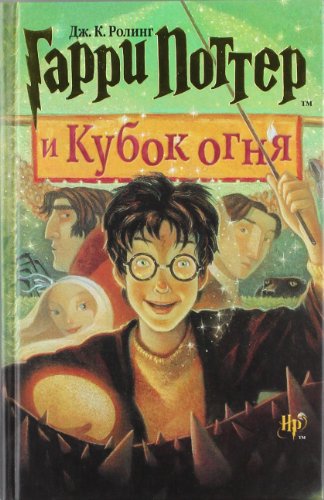

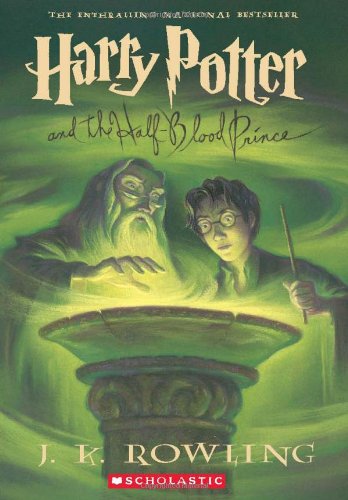
 "I am an extraordinarily lucky person, doing what I love best in the world. I’m sure that I will always be a writer. It was wonderful enough just to be published. The greatest reward is the enthusiasm of the readers." --J.K. Rowling.


 "When I illustrate a cover or a book, I draw upon what the author tells me; that's how I see my responsibility as an illustrator. J.K. Rowling is very descriptive in her writing--she gives an illustrator a lot to work with. Each story is packed full of rich visual descriptions of the atmosphere, the mood, the setting, and all the different creatures and people. She makes it easy for me. The images just develop as I sketch and retrace until it feels right and matches her vision." Check out more Harry Potter art from illustrator Mary GrandPré.